Jesus Christ Parables
Jesus Christ told numerous parables as recorded in the New Testament of the Holy Bible.
According to the dictionary a parable is a story designed to teach a moral.
Ah, but they are so much more.
Depending upon the level of understanding a parable can be just a simple story
or an elaborate display of God's love for us.
As our understanding of God deepens so do new levels of understanding of his parables occur.
The following parables are beautiful expressions of God's love for each and every one of us.
Many of the parables in the book of Matthew are
repeated in slightly different versions and recorded by other disciples - in Mark, Luke or John.
Please feel free to add your knowledge to the parables listed here at Web-Ministry!
List of the Jesus Christ Parables
- Parable of the Mustard Seed
- Parable of the Ten Virgins
- Parable of the Leaven
- Parable of the Vine
- Parable of the Pounds
- Parable of the Pharisee - Publican
- Parable of Lazarus
- Parable of the Unjust Steward
- Parable of the Kings Feast
- Parable of the Prodigal Son
- Parable of Barren Fig Tree
- Parable of the Great Supper
- Parable of the Praying Widow
- Parable of Servants
- Parable of Rich Fool
- Parable of the Good Samaritan
- Parable of the 2 Debtors
- Parable of the Man on Journey
- Parable of 10 Talents
- Parable of Wicked Husbandmen
- Parable of Friends at Night
- Parable of the 2 Sons
- Parable of Laborers in Vineyard
- Parable of the Unmerciful Servant
- Parable of the Good Shepherd
- Parable of the Lost Sheep
- Parable of the Secret Seed
- Parable of the Wheat-Tares
- Parable of the Sower
- Parable of The Wise - Foolish Builders
Last 50 Comments Left on Parables
Post subject: Mustard TRee
User Location: Palmetto, Louisiana
Parable: mustardseed.txtthread
Please send me a picture of the mustard tree. All my life I have thought they were talking about mustard greens for some reason, but could not understand how they thought it grew into a tree. A friend told me about the mustard tree and I am searching the internet for a picture of one.
Thank you
^ TOP
 willy on Friday, April 9 3:58 pm
Post subject: Help
User Location:
Parable: goodsamaritan.txtthread
Hi Willy,
The Good Samaraitan act doesn't need a "modern day" example. It is relevant today as it is yesterday and in the future. The principle is to do "good" to anyone irregardless of who they are. To offer assistance to anyone who is in need. If you will, today, it is the "act of kindness". But most of all it must come from the givers heart, that the willingness to do good is pure and without asking or seeking any form of compensation or return.
You many have been doing this without you knowing it.
Willy
^ TOP
Glenn on Saturday, May 29 8:50 pmPost subject: Insight about the the prodigal son
User Location: the prodigal son
Parable: prodigalson.txt
The prodigal son -
1. He leaves his father's house (He leaves God)
2. He ie eligible for 1/3 of the wealth
3. He waste money earned by others
4. He is broke and he joins himself to a country in famine
(He is apart of the wrong sector - an unproductive realtionship)
5.Upon return his father is happier to see him than he is his father
6. under the jewish law he could have been stoned to death
7. he could have been beaten a breath away from death - but not killed
8.. incorrect theology - he wanted to be forgiven and placed on a lower status (a servant). But repentance restore you back to the same level (not title in the sight of man)in the sight of God
9. The ultimate revelation above God's grace and mercy is this: That life in full is not about us - but God is the central figure and the main character in every story
^ TOP
delano on Monday, May 15 2:59 pmPost subject: the prodigal son
User Location: freeport
Parable: prodigalson.txt
the prodigal son is a parable of imense propotion the can touch the very fonation that you stand on its various words of knowledge and wisdom leave many suttering for words
^ TOP
Hythloday on Wednesday, November 12 2:37 amPost subject: Simone Weil's insights
User Location: Melbourne
Parable: goodsamaritan.txt
The French philosopher Simone Weil brought out some amazing insights on divine love based on this parable.
She notes that Jesus does not describe good neighbours as "loving" or "charitable", but "just". There is no distinction between justice and love. Greek justice occurs when two parties of equal strength come to an agreement. Supernatural justice occurs when an unequal relationship is treated equal by the stronger party - that is, the stronger party treats the weaker as his equal.
This is what the Samaritan did. Others walked by him, and saw an anonymous lump of flesh - they did not see a person. The Samaritan could not see the victim's humanity either, but he took that humanity on faith and acted lovingly towards the victim. Weil says that in this way, "Love shows us what is invisible."
The love of the Samaritan is not creturely love, it is divine love. She has an odd idea about Creation which I cannot agree with it, but it can deepen our understanding of love, so here it is:
God and His creatures are less than God alone. Creation was an act of loving renunciation - "He emptied a part of His being from Himself; that is why John says that the lamb had been slain from the beginning of the world."
When we love our neighbour, we are replicating God's love for Creation. We renounce a part of ourself. No person can love his neighbour. (I distinguish neighbour from friend, relative, beloved, etc.) God gives us that love.
"Only God, present in us, can really look at the afflicted with a look differing from what we give to ‘things’, can listen to their voice as we listen to spoken words. The love of our neighbour is the love which comes down from God to man."
Raphael Hythloday.
^ TOP
Kevin Douglas Rosenberg on Wednesday, November 26 5:25 amPost subject: Thank God for the Scriptures for our Deliverance
User Location: Columbus, Indiana, USA; ***not called to stay***
Parable: Kevin_Patsy
On behalf of everybody who like me has been martyred by the evil servants in charge of churches through calling the police to remove us from church or arranging hostile psychiatric hospitalization on account of spoiled rotten begging, I thank God for His words which justify us (Matt. 5:42, 6:24ff, 7:7) and promise our deliverance (Matt. 24:45-25:30).
We who have suffered such abominable punishments deserve to know well that we have no rewards waiting in heaven for us for patiently enduring under punishment from evil servants in charge or, especially, for going over the line between right and wrong in our begging... because Matt. 7:6 and I Peter 2:20 were printed in copies of the Holy Bible available to us long before our sufferings. Therefore, such a pastor as may dominate us now to keep our grievances quiet has no crowns in heaven to offer us for accepting his church discipline, and our rewards in heaven will be far greater if we cry out and call the church leaders completely to account for such failings as broken promises to spread the Gospel throughout the whole world by the year 2000.
Jesus Christ will be far more satisfied with us and able to bless us if we become completely frank with Him in prayer and no longer hold back our hearts. Failing to help us in our times of greatest need on earth through needed divine intervention, He has provided for absolutely incredible vengeance against the evil servants in charge (Matt. 24:45-51) in place of more years of freedom to apostatize in which to enjoy being completely healed and established as we might prefer. That the churches have already failed to fulfill their promises to evangelize the world by the year 2000 has changed the proper interpretation of Matthew 24:45-25:30 incredibly adversely for the evil servants in charge from offices to pulpits.
Because so many church leaders and evangelists have made and broken these promises, it is now patently apparent that they are unable to plan to spread the Gospel throughout the world with a testimony to all peoples (Matt. 24:14, Mark 14:9) and follow through on their promises. Well, the clock is ticking! The generation of Jews who saw Israel become a nation when they were twenty years old is aging, and God's holy Name is at stake to return before they all pass away. For this reason, the loss of morale among missionaries from failing to fulfill their promises to evangalize the world by the year 2000 cannot continue to drive churches inward to build the home church building and congregation and ignore world evangelism. In this context, the pastors' pretext that the judgements of Matthew 24:45-25:30 would be carried out in Heaven with the ever forgiving character of Jesus Christ as master must be torn to shreds; for if they should get their way, world evangelism will NEVER happen to make Jesus Christ return when He promised! Let us examine the judgements of Matthew 24:45-51 as possibe on earth with human masters or groups of humans as masters. This is now necessary to bring about world evangelism and the rapture of the saints.
Now seek I to bring about the judgement of the servants in charge as soon as possible on this earth (Matthew 24:45-51) so that without the hindrances of the Church Growth Movement, world evangelism may be attempted under faithful leadership, which unlike the Church Growth Movement will remember the need to memorialize Mary's anonymous anointing of Jesus Christ at Bethany if our spread of the Gospel really be worldwide (Mark 14:9, John 12:1-3). The power to judge is not yet in the right hands, yet our omnipotent Lord, praised be his name!--is surely able to bestow it. Promises from the American government such as our First, Fifth, and Eighth Amendment rights must fail, however that may happen, in order to judge the evil servants in charge with amputations and floggings as Jesus said would be done (Matt. 24:45-51, Luke 12:42-48); still I say, our awesome God is omnipotent and able to accomplish this, and both to those who pray to keep America safe and secure and to national enemies who would rejoice in an invasion or a coup d'etat I remember my citizenship in heaven and offer the Lord's Prayer just the same. American constitutional rights are defending injustices which Jesus Christ will not tolerate just before His return. Still, unless the United States Congress and the state legislators wake up to the reality of the end times and find some way to permit the imposition of the judgements upon the evil servants in charge prescribed by Jesus Christ, God's will could turn in an extremely adverse direction very fast in order to allow the ousting of bad pastors so that world evangelism may be accomplished.
And now I announce judgements. The demands of all the flock's wealth and amputations made by telephone in 2001 of the Meier family at Twin City Bible Church in Urbana, IL 61801, in place of failure to provide fifty million dollars requestewd in 1997 and 1998 to be obtained by begging to compensate Kevin Douglas Rosenberg for ruinous, utterly needless, admittedly mistaken psychiatric captivity and drugging (sin of witchcraft, Gal. 5:19, Greek), will accrue more demanded amputations before God: a thumb's weight weekly if evil servant in charge Bill Meier dare escape what was demanded before into the afternoon of December 26, 2003 UT. I myself cannot impose this, yet I dare ask Jesus his Lord, and He encourages me to keep on asking (Matt. 7:7). I have had to sin habitually because of Bill's influence on pastors to keep me quiet until I had to junk church after church to escape their domination, and I call down Matt. 18:5-7 to curse Twin City Bible Church like the fig tree in the name of Jesus Christ and send Bill's flock destitute for nearby churches to send out.
I do not possess such power as to bring this all about, yet still I thank God again for the Scriptures to show my current ways right before Him and to deliver me from the power of the evil servants in charge of today's churches through His will for vengeance. May God help our mentally ill brethren and everyone else in Him who needs assistance and has trouble asking for it among English speakers in authority. In Jesus' name, Amen.
^ TOP
Patrick moo on Monday, August 23 5:01 amPost subject: PRODIGAL SON
User Location: TENNESSEE
Parable: prodigalson.txt
I AM A PRODIGAL SON. I RETURNED TO THE FAITH OF MY YOUTH AND LIKE AN ADDICT WHO RETURNS TO HIS ADDICTION AFTER A LONG TIME AWAY FROM IT FINDS HE IS ADDICTED AT THE LEVEL HE WOULD HAVE BEEN HAD HE NEVER BEEN FREE OF IT.
I EMBRACED MY FAITH AT A HIGHER LEVEL THAN I HAD THIRTY YEARS BEFORE. I AM ECSTATIC AT BEING FORGIVEN AND TAKEN BACK INTO THE FOLD OF CHRISTIANITY AND THE LOVING BODY OF CHRISTS CHURCH.
MY DAUGHTER LEFT THE MY PREVIOUS CHURCH AND EMBRACED ANOTHER WHOLE HEARTEDLY. NOW WHEN I LONG TO COMMUNE WITH ALL MY CHILDREN ABOUT GODS LOVE AND HIS WORD SHE BECOMES HOSTILE TOWARD ME AND MY FAITH AND DEFENSIVE ABOUT HER OWN.
I SEE THE PRODIGAL SON PARABLE IN THAT LIGHT. SHE AS THE ONE WHO STAYED WITH THE FATHER BUT RESENTS ME FOR COMING BACK TO GOD WITH HUMILITY AND GRATITUDE AND WANTING TO SPREAD GODS LOVE TO THOSE WHO DON'T KNOW IT LIKE I DO. SHE IS NOT REALLY WITH THE FATHER AND DOES NOT KNOW HIS MESSAGE OF LOVE TO ALL SINNERS BUT LIKE THE PHARASEES STICKS STRICTLY TO THE LETTER OF THE LAW AS SHE SEES IT THROUGH HER INSTRUCTION. I KNOW THAT SOUNDS LIKE I AM JUDGING HER BUT I AM THE ONE WHO LISTENS TO HER ACID TOUNGUE AND PRAY SILENTLY FOR HER SOUL TO MYSELF, ASKING THE HOLY SPIRIT TO OPEN HER MIND TO SEE HER PRIDE TAKING CONTROL OF HER THOUGHTS. WE PARENTS LOVE OUR CHILDREN NO MATTER WHAT THEY DO OR SAY TO US. IT BREAKS MY HEART NOT FOR ANY INJUSTICE THAT SHE OR I HAVE CAUSED EACH OTHER ALTHOUGH I WAS WRONG FOR TOO LONG BUT BECAUSE WE NEED TO BE LIKE HIS SON AND 'FORGIVE THEM THEIR TRESSPASSES.' I DON'T TAKE HER WORDS AS AN AFRONT TO MYSELF BUT TO GOD. THAT MAKES ME SAD , KNOWING ALL HE HAS DONE FOR US AND WE STILL DON'T TRUELY UNDERSTAND HIS MESSAGE 'LOVE ONE ANOTHER'
I THOUGHT I'D SEND HER A LETTER QUOTING THE 15th chapter of Luke and the good son in the prodigal son parable but I see from your responses how many ways she could misinterpret it, so I'll just pray more intensly for all my children and trust in his will.
Thank you for the insight you have given me.
^ TOP
L. Mertes on Tuesday, December 9 6:22 pmPost subject: Advice
User Location: Hudson, FL
Parable: Kevin_Patsy.txtthread
Sounds like you're grinding an ax with a church leader somewhere. May I recommend you handle it the way Jesus told his disciples to deal with the offended Pharisees?
"Every plant that my heavenly Father has not planted will be pulled up by the roots. LEAVE THEM; THEY ARE BLIND GUIDES. If a blind man leads a blind man, both will fall into a pit." (Matt. 15:13,14)
Make your appeal to the flock and leave corrupt leadership to the wrath of God (if in fact they really are corrupt). Those who have ears to hear and eyes to see CANNOT be mislead by false--or as you call them--"evil servants". How can someone who sees be lead around by someone who cannot see? And that's Jesus's point exactly. He didn't get overly concerned about the wolves in sheep's clothing. Neither did Paul. They both warn us of their presence, but Paul reminds Timothy that even though false teaching "destroy(s) the faith of some...Nevertheless, God's solid foundation stands firm, sealed with this inscription: 'The Lord knows those who are his...'" (2 Tim. 2:18,19)
Take comfort in that.
I'm guessing there is a lot more going on here than we readers know about. I don't know exactly what the contention is you're having with this paster in Illinois, and I don't want to know, but let it go and be careful to "not entertain an accusation against an elder unless it is brought by two or three witnesses." (1 Tim.. 5:19). Truthfully, warning the world about a leader in faraway Urbana, IL will only serve your own purposes and not those of the world-wide body of Christ (unless he has a world-wide ministry).
Don't resort to rebuking an elder by name on a public forum without witnesses, much prayer, and a sober investigation of your own motives.
It's amazing how personal agendas motivate some of our so-called Christian duty. Often it is pride or envy disguised as zealous Christian duty. Let love be your guide as you examine the teachings of Christ and the example he has left recorded for us in scripture.
A good example of a mis-guided agenda could be this issue of giving that Jesus addresses in the scriptures. Nobody could argue with his desire for all of us to be hilariously generous with our worldly wealth. Like other things the Lord wants us to do (witnessing, giving, praying...) someone will come along who doesn't struggle with one of these and is quite productive in them. So now his life's mission seems to be to beat the rest of us Christians over the head with what that person now feels is the essential command of the scriptures--essential because he feels it so strongly in his own life and is so good at it.
It can be, for instance, a veiled form of pride. A way of boldly standing up and saying "look what a generous giver I am". We resort to condemnations, heaping heavy loads onto the backs of other believers, and not lifting a finger to help carry those loads. In effect saying, "I did it, so can you!" The self-righteous pride of glorying in one's service to God, as if they did it all by themselves, comes out in criticism and condemnation of those who don't do it like you, or to the same extent. In this example the exhortation to give, looks righteous, but is really motivated by the ugly sin of PRIDE! There is NO reward waiting for that work!
Anyway, I've learned alot about myself through this kind of self-examination. Maybe it will be helpful to others too--help to discern the true will of God for specific areas of our lives guided by the pure love that God has.
I'm flipping over to your words about the Luke 16 parable to learn more about the role of the rich man. I don't quite understand your pitch, but before I ask anymore I'll check out your statements, and because this page is dedicated to the parable of the talents.
^ TOP
Stef on Sunday, May 8 5:21 pmPost subject: reply to the older son
User Location: andover, ma
Parable: prodigalson.txtthread
There is nothing that says the older brother is loved less, the father says in the story that what is his is the older son's also, jus because he isn't rewarded like the younger son is doesn't mean anything negative. The older son should not be jealous or envious because his reward will come also. It's just that God's love is also there for those who have sinned and have recognized their sin and return to accept God's love by asking for forgiveness.
^ TOP
Mildred Dean Windham on Saturday, July 26 2:15 amPost subject: the mustard tree,
User Location: Laurel, Ms
Parable: mustardseed.txtthread
I heard a preacher preach on the mustard tree.
Sheep can lie under it and be healed of fleas and ticks from the sap that runs free.
The tree has white blooms with a gold center.
The goats hate this tree.
The only flower that will bloom under the tree is the sweet rose of Sharon. when it blooms the white flowers on the tree turns crimson red.
Also the tree is battered and beaten in the winter time, the leaves fall off and in three days it will bloom agasin.
This was the pretiest story i've ever heard and want to know if there is some way I an get a copy os the tree. and the story, or legend of the mustard tree.
It is over twenty feet tall and huge around.
Thanks for your time, and may God bless you.
^ TOP
Edward Taylor on Tuesday, September 11 3:13 pmPost subject: Lazarus and the rich man
User Location: Jefferson City Mo
Parable: lazarus.txtthread
I would say, mercy! That is all Lazarus desired in the crumbs!
The rich man now is experiencing the consiquences of his own
life decisions, in death. In life, the rich man had an opportunity,
which was a chance to give mercy to Lazarus or any one who was in need of mercy.He had in life, favorable conditions.We
must be very careful how we treat people. People belong to God.
So, now we see in the text the two extremes have traded places
substance wise. The rich man has become the begger, and the begger
has become rich!!!! Lazarus is so rich with the wealth of God that
he has Father Abraham as an AMBASSADOR! (smiles)
"Father Abraham, have mercy on me and send Lazarus"
2nd
Hell is forever! once you are in hell there is no chance, no way, no how!
No,no,no, listen to the responce of Abraham to the rich mans plea.
Luke 16:26 And besides all this, there is a great gulf fixed: so that they which would pass from hence to you cannot; neither can they pass to us,that would come from thence. But, there is still to come judgement after a period of time. Not that this rich man is going to be in hell for a time and then go to heaven. Once we die, its too late to work the work of repentance. The time is now, while the blood is running warm in our vains. Now is the time of salvation! We all must repent of our sins before we pass away to an eternal state of existance. Then shall we forever be with the Lord Jesus having all things in common. Joy Peace Love Happiness that shall never cease. No more pain, no more suffering, no more sorrow,no more saddness. No more sickness, no more dying, no more crying, there be no more preaching no more teaching, for all secrets will be revealed, no more hate, no more no more no more! Joy! Love! God shall be with us and we shall be with Him forever! Give! and don"t hold back like the rich man. Give your life to Jesus and like He did for Lazarus he likewise do the same for all that believe and trust in Him.
^ TOP
Chrysoprasus on Saturday, July 27 11:00 pmPost subject: In Mark 4 Jesus tells the parable of the sower.
User Location: USA
Parable: sower.txt
In Mark 4 Jesus tells the parable of the sower.
The sower is the messenger spreading the gospel.
The first kind of soil is hard soil. The message goes in one ear and out the other. The hearer has no interest in it...he could care less about Jesus! The devil steals the seed away as fast as the message arrives.
The second kind of soil is shallow. The message is received with joy. But as soon as persecution arises he wilts and falls away. Possibly this person walked down an isle and shed many tears.
The third kind of soil is infested with thorns/weeds. The hearer receives the message. But the cares of the world (raising kids...spouse... paying mortgage.... having a time share....paying bills) makes it ineffective. "Someday when I have more time I'll think about Jesus." This person "chokes" and isn't seen again. (It strikes me that this third kind of hearer is the main problem in America.)
The fourth kind of soil receives, responds, and produces. Some 30-60- 100 fold. This person is genuinely saved.
PROBLEM.....I'd like to have a bigger distinction between the 2nd and third kind of hearer/soil. To me, these could be grouped together as one kind of soil.
I'd say that the first 3 kind of hearers are not saved. Only #4 is truly saved.
Chrys _________________ Teach me thy way, O Lord; I will walk in thy truth.
^ TOP
Imran Bhatti on Friday, March 25 7:50 amPost subject: video projector
User Location: Lahore, Pakistan
Parable: mustardseed.txtthread
Respected authorities,
Greetings in the name of Lord Jesus Christ.
My name is Imran Bhatti and I am a director of Sunday school of Christ Revival Church. It is situated in Lahore, Pakistan. There are about 200 children learning about Jesus Christ in our Sunday School. We often take them to other churches where they learn from other teachers also. We also take them to different programs arranged by Scripture Union Pakistan so that they may learn more. I have 5 permanent volunteer teachers working with me and I also call a few other volunteers to help me in different programs, whenever it is needed. In our Sunday School children also learn by drama. On every Christmas and Easter children perform different dramas regarding Christmas and Easter. By this people can learn more about our savior. As you know that we are living in a computer age and there is a lot of Biblical material available on different web sites. For example Bible stories, Biblical games and puzzles. Such soft wares are very effective for children because children are more interested in moving pictures than in still pictures. We have some still pictures in the form of flash cards of Biblical stories. But flash cards can not fulfil the strong impact of motion pictures. So in order to build a strong base of our children and church family, we are in great need to get some donation in the form of new or used video projectors, screen and a overhead projector. We also need these instruments to make the messages more effective and to display songs for choir and congregation. Kindly let us know, what you can do in this matter.
Looking forward to hearing a positive response from you SOON.
May God bless you.
Yours in His Service,
Imran Bhatti
Director of Sunday school & Bible Teacher
Office Tele:- 092-042-5855968
Cell Phone:- 092-042-03004095074
E-mail: heaven3_ct@yahoo.co.uk
^ TOP
Marie Dzielak on Monday, May 23 1:45 amPost subject: a greater understanding
User Location: New York
Parable: prodigalson.txtthread
I hope by now you have found some of the peace you were seeking. I never understood the parable of the prodigal son until I had one. The argument of the dutiful son always made sense to me. But now that I have a younger child who has gone off to waste and destroy his God-given talents through drug abuse, crime, problem relationships...I fully understand how gladly I would celebrate his return to us, not expecting any favored treatment from us. All the time I love both my children, but more of my prayers have been for the wayward one. The celebration would be for the answer to my prayers.
^ TOP
Ajo Mathew on Thursday, April 24 12:18 amPost subject: Pharisee and Publican
User Location: Cherry Hill
Parable: prodigalson.txtthread
Parable of Pharisee and Publican
1) Whats the religious message of the account for the people of Jesus' time?
2) Whats the religious message of the account for people today?
^ TOP
Lavern Gingerich on Saturday, October 28 1:42 amPost subject: Watch and Be Ready!
User Location: Pikeville, TN
Parable: tenvirgins.txt
Jesus is coming for His bride. Let us all watch and be ready for the marriage supper of the Lamb!
Lavern Gingerich
www.pursuinglife.com
^ TOP
Yanyi on Friday, October 24 12:34 pmPost subject: brassica
User Location: Singapore
Parable: mustardseed.txtthread
I was searching for the pic of brassica to do my botony proj. I wonder if u have... (at least accoring to google description u do)...can u send me one?..
By the way, wat type of min is this?.. christians right?
^ TOP
Kevin Douglas Rosenberg on Wednesday, December 3 8:34 pmPost subject: How and When to Watch for Christ
User Location: Columbus, Indiana, USA
Parable: Kevin_Patsy
How come some user has reported that the Rich Fool with a few comments had received the fewest when this one had not received even a single comment? I urge you to read the comments to all parables given on the site through before typing any comparisons. We need to listen and read more and talk and type less but more wisely. Now, I discuss this parable for the first time.
Of all parables spoken by Jesus, this one is the most inadequate from a single gospel. Only four verses are given because Saint Mark was a man of action with the Sensing function dominant in the MBTI personality indicator; his gospel, the shortest, reads like the script for a movie and omits details in order to keep the interest of a Sensing reader with a typically short attention span. His natural readers are the quickest to doze off, leave or interrupt. As if to answer in court, Mark cared to testify concerning Jesus' deeds at the expense of His teachings. In order to understand what the quoted Jesus actually taught, we need to remember what Matthew and Luke reported about watching and waiting for a surprise return (Matt. 24 : 32 - 25 : 46 , Luke 21 : 29 ff ). It is those accounts which will empower us to watch for the return of Christ.
Saint Mark's way for us to watch is to see and do, to listen and learn from those versed in the other accounts. He leaves the thinking, feeling, and intuition to others: Matthew, Luke, and John. Faith in the Bible will not resist them; fortunately for us, however, Matthew and Luke mentioned all those details so that John had no need to fill them in. Three gospels thus suffice to teach us what watching and waiting means in practical terms.
From Mark we know that of all the servants, we disciple of Jesus, the Messiah, are likened unto porters, "thyro^roi" (door + see, watch) or butlers in Greek, with responisibilities to answer the door (or telephone) when people come knocking (or calling) to ask and to seek (Matt. 5 : 42 , 7 : 7 ). One Sunday morning about two months ago, a homeless neighbor of mine and her man kicked out by her grown daughter knocked on my door at 5 a.m. on a Sunday before morning when they could not stand the cold night outside any longer. The woman asked for three hours inside. Found sleeping and hastily clad in a robe I let them in, even though the man was not mentioned, even though they disobeyed my command to sleep on my floor and left leaves on my new couch, and even though they stayed four hours before I moved toward kicking them out and they took the hint. My own night's sleep was ruined, and I felt jetlagged. I had, however, used my living room to keep them warm and to get four hours of televangelists' presentations of the Word into their ears and perhaps sinking into their hearts. I have planted a seed.
I was found sleeping by homeless unbelievers. Don't let Jesus, however, knock at your doors to find you sleeping on the job, so to speak. Mark omits all the details for the precise timing of Jesus' return. Back then, nobody save God knew anything about time zones, and many believed the earth to be flat despite observations of ships sinking beyond the horizon. Anybody who might predict such a time for Jesus return as 6 a. m. (regardless of location) would be a liar to the vast majority of the world beyond his narrow time zone even if He should chance to come then unto him. For our times, however, St. Matthew reports that Jesus taught that He would return by surprise in a time of plenty when people were not looking for Him and while women were grinding grain and men were at work in the field. All I assume below is that Jesus Christ, because of His good, loving character rather than a knavish, tricky character, would never return to an inhabited time zone without the signs of field work and milling there with word that Americans were hard at work far away, nor would He return to the Russians without the sign in winter with word that Americans far away were eating fresh fruits and vegetables flown in.
In that case, we can know general periods throughout which to watch for Christ from Matthew 24 : 32 - 44. The first sign, the fig tree, represents modern Israel. The generation which Jesus has promised will not pass away until the Glorious Appearing ... was twenty years old when modern Israel was founded in 1948 (v. 34; reference to Ezek. 38). Thus, out of all centuries of history, Jesus' Second Coming is for our times. Verse 35 is a warning to every believer who despairs of world evangelism in time (v. 14) that Jesus will live up to His Word to make it happen and return in time to find live Jews of the mentioned generation. Hallelujah! In need of warning are all Christians who made or believed promises to evangelize the whole world by the year 2000 but now forget them or cover them up. Mark elaborates on verse 36 while The sign of Noah in vv. 37 - 39 tell us when in the year or economic cycle to watch for Jesus: in the boom times with fresh fruits and vegetables to eat and weddings taking place.
We would be foolish, therefore, not to watch in June of all coming years. The more we learn about life in more austere mission fields such as Siberian settlements, the fewer weeks will remain in the year in which we must watch for Jesus, at the expense of having God call us to give your wealth away to help their people because they will ask. Next comes the time of day in our respective time zones with more admonition to watch (vv. 40 - 42), which I understand as follows:
Before the Industrial Revolution with its continuous processes and electric lighting, people worldwide farmed and ground grain by day and partied or slept at night throughout the week. Whenever the sign of field work and milling existed throughout one hemisphere, it was absent in the other. Nowadays, however, farmers in the United States and South America are observed with their equipment in the fields making progress at night whether to hide drugs or to finish in good weather, and Cargill and other milling companies process grains continuously throughout the week. Such a practice invites Jesus Christ to return by night. This leaves no promise from Christ for Americans concerning the time of day, yet He will keep his promise to the underdeveloped nations of the Old World, where farming the fields and grinding grain are still done only by day. If you go to Africa or Asia, where many peoples have yet to hear a testimony of the Gospel, you can see the signs in the daytime, while those who remain in the United States might have to watch around the clock. I thoroughly expect that the Rapture will occur between midnight and 4 a.m. in Indianapolis because of Jesus' promises to the Old World. That's a wide swath of four hours in the inconvenient night because no one but the Father God knows the day or the hour (v. 36). Those of us who cannot watch require sending out as missionaries to the Old World. And now, let us examine verses 43 and 44: that people will be caught sleeping and live to regret it like a successful burglary. This sign, like that of Noah, shows us that people will not be naturally seeking Christ at that time and tells us when in the week we must watch in season at the right time of ***night*** (American times). Our Lord will not return during any American church's Sunday School or Sunday Morning Worship or Weekly Bible Study or Wednesday Worship or on the Jewish Sabbath. He will not return when many pastors are preparing their lectures without cause and desire to demonstrate the apostasy of all their teachings. Therefore, since most pastors take Mondays off after teaching on Sunday, in season we had better watch on so-called Sunday nights and Monday nights actually falling in the wee hours (in Indianapolis) on Monday and Tuesday, although Jesus could return to take us home later in the week before Sabbath preparations. With at least two nights in the week to watch, we do not know the day of the week for Jesus' return (v. 36).
I have discussed the next parts at length on the Ten Virgins page. Now that we know when to be best prepared to meet Jesus, I turn to Luke for guidance on how to watch. While Saint Luke parallels Matthew in Chapter 17, it is Chapter 21 which shows Jesus' warning against being left behind to face the Tribulation (Luke 21 : 34 - 36 ). From Jesus' mouth in verse 34, it is a heart laden with overeating and drinking or drunkenness and
worries of life which set many of us up for being left behind by Jesus. Just belonging to Jesus will not spare us the Tribulation. If you are continually worried, that is habitual sin (Matt. 6 : 24 ff ). The worried believer who cannot or dare not ask, seek or knock for relief (Matt. 7 : 7 ) and whose prayers fail to avail relief gets called by God to fast. Why, with the guilt of Israel, Moses fasted forty days! Our Lord did the same in order to stand His Temptation. Yes, genuine Christians can, and many probably will, be left behind to face the Tribulation for living it up despite their persistent worries and sleeping when Jesus takes the prepared believers home.
I have desired to preach Second Thessalonians at some graveyard on television during Indiana's wee hours in season on so-called Sunday, Monday, and Thursday nights to warn American Christians that the Lord Jesus Christ expects us to watch, to wait up for Him, and to go abroad as evangelists if they cannot stay up, but my friend in Christ, Dallas Barr, has discouraged me for fear that I might appear to be there to rob graves. I lack formal theological credentials and declare my informal learning good enough with the time short. (Lord's Prayer)
Yours in Christ,
+++ Kevin D. Rosenberg
a martyr for continuing to ask, seek, and knock (Matt. 7 : 7 )
^ TOP
Michael Moran on Saturday, July 10 11:45 pmPost subject: Good Samaritan
User Location: New Milford, CT
Parable: goodsamaritan.txt
Thanks for the insights - they help in sermon prep. I've been reading what Dr. Martin Luther King said:
ON BEING A GOOD NEIGHBOR
Martin Luther King
And who is my neighbour?
Luke 10: 29
I SHOULD LIKE to talk with you about a good man, whose exemplary life will always be a flashing light to plague the dozing conscience of mankind. His goodness was not found in a passive commitment to a particular creed, but in his active participation in a life saving deed; not in a moral pilgrimage that reached its destination point, but in the love ethic by which he journeyed life's highway. He was good because he was a good neighbor.
The ethical concern of this man is expressed in a magnificent little story, which begins with a theological discussion on the meaning of eternal life and concludes in a concrete expression of compassion on a dangerous road. Jesus is asked a question by a man who had been trained in the details of Jewish law: "Master, what shall I do to inherit eternal life." The retort is prompt: "What is written in the law? How readest thou?" After a moment the lawyer recites articulately: "Thou shalt love the Lord thy God with all thy heart, and with all thy soul, and with all thy strength, and with all thy mind; and thy neighbour as thyself." Then comes the decisive word from Jesus: "Thou hast answered right: this do, and thou shalt live."
The lawyer was chagrined. "Why," the people might ask, "would an expert in law raise a question that even the novice can answer?" Desiring to justify himself and to show that Jesus' reply was far from conclusive, the lawyer asks, "And who is my neighbour?" The lawyer was now taking up the cudgels of debate that might have turned the conversation into an abstract theological discussion. But Jesus, determined not to be caught in the "paralysis of analysis," pulls the question from mid air and places it on a dangerous curve between Jerusalem and Jericho.
He told the story of "a certain man" who went down from Jerusalem to Jericho and fell among robbers who stripped him, beat him, and, departing, left him half dead. By chance a certain priest appeared, but he passed by on the other side, and later a Levite also passed by. Finally, a certain Samaritan, a half-breed from a people with whom the Jews had no dealings, appeared. When he saw the wounded man, he was moved with compassion, administered first aid, placed him on his beast, "and brought him to an inn, and took care of him."
Who is my neighbor? "I do not know his name," says Jesus in essence. "He is anyone toward whom you are neighborly. He is anyone who lies in need at life's roadside. He is neither Jew nor Gentile; he is neither Russian nor American; he is neither Negro nor white. He is 'a certain man' any needy man on one of the numerous Jericho roads of life." So Jesus defines a neighbor, not in a theological definition, but in a life situation.
What constituted the goodness of the good Samaritan? Why will he always be an inspiring paragon of neighborly virtue? It seems to me that this man's goodness may be described in one word altruism. The good Samaritan was altruistic to the core. What is altruism? The dictionary defines altruism as "regard for, and devotion to, the interest of others." The Samaritan was good because he made concern for others the first law of his life.
The Samaritan had the capacity for a universal altruism. He had a piercing insight into that which is beyond the eternal accidents of race, religion, and nationality. One of the great tragedies of man’s, long trek along the highway of history has been the limiting of neighborly concern to tribe, race, class, or nation. The God of early Old Testament days was a tribal god and the ethic was tribal. "Thou shalt not kill" meant "'Thou shalt not kill a fellow Israelite, but for God's sake, kill a Philistine." Greek democracy embraced certain aristocracy, but not the hordes of Greek slaves whose labors built the city states. The universalism at the center of the Declaration of Independence has been shamefully negated by America's appalling tendency to substitute "some" for "all." Numerous people in the North and South still believe that the affirmation, "All men are created equal," means "All white men are created equal." Our unswerving devotion to monopolistic capitalism makes us more concerned about the economic security of the captains of industry than for the laboring men whose sweat and skills keep industry functioning.
What are the devastating consequences of this narrow, group-centered attitude? It means that one does not really mind what happens to the people outside his group. If an American is concerned only about his nation, he will not be concerned about the peoples of Asia, Africa, or South America. Is this not why nations engage in the madness of war without the slightest sense of penitence? Is this not why the murder of a citizen of your own nation is a crime, but the murder of the citizens of another nation in war is an act of heroic virtue? If manufacturers are concerned only in their personal interests, they will pass by on the other side while thousands of working people are stripped of their jobs and left displaced on some Jericho road as a result of automation, and they will judge every move toward a better distribution of wealth and a better life for the working man to be socialistic. If a white man is concerned only about his race, he will casually pass by the Negro who has been robbed of his personhood, stripped of his sense of dignity, and left dying on some wayside road.
A few years ago, when an automobile carrying several members of a Negro college basketball team had an accident on a Southern highway, three of the young men were severely injured. An ambulance was immediately called, but on arriving at the place of the accident, the driver, who was white, said without apology that it was not his policy to service Negroes, and he drove away. The driver of a passing automobile graciously drove the boys to the nearest hospital, but the attending physician belligerently said, "We don't take niggers in this hospital." When the boys finally arrived at a "colored" hospital in a town some fifty miles from the scene of the accident, one was dead and the other two died thirty and fifty minutes later respectively. Probably all three could have been saved if they had been given immediate treatment. This is only one of thousands of inhuman incidents that occur daily in the South, an unbelievable expression of the barbaric consequences of any tribal centered, national centered, or racial centered ethic.
The real tragedy of such narrow provincialism is that We see people as entities or merely as things. Too seldom do we see people in their true humanness. A spiritual myopia limits our vision to external accidents. We see men as Jews or Gentiles, Catholics or Protestants, Chinese or American, Negroes or whites. We fail to think of them as fellow human beings made from the same basic stuff as we, molded in the same divine image. The priest and the Levite saw only a bleeding body, not a human being like themselves. But the good Samaritan will always remind us to remove the cataracts of provincialism from our spiritual eyes and see men as men. If the Samaritan had considered the wounded man as a Jew first, he would not have stopped, for the Jews and the Samaritans had no dealings. He saw him as a human being first, who was a Jew only by accident. The good neighbor looks beyond the external accidents and discerns those inner qualities that make all men human and, therefore, brothers.
The Samaritan possessed the capacity for a dangerous altruism. He risked his life to save a brother. When we ask why the priest and the Levite did not stop to help the wounded man, numerous suggestions come to mind. Perhaps they could not delay their arrival at an important ecclesiastical meeting. Perhaps religious regulations demanded that they touch no human body for several hours prior to the performing of their temple functions. Or perhaps they were on their way to an organizational meeting of a Jericho Road Improvement Association. Certainly this would have been a real need, for it is not enough to aid a wounded man on the Jericho Road; it is also important to change the conditions which make robbery possible. Philanthropy is commendable, but it must not cause the philanthropist to overlook the circumstances of economic injustice which make philanthropy necessary. Maybe the priest and the Levite believed that it is better to cure injustice at the causal source than to get bogged down with a single individual effect.
These are probable reasons for their failure to stop, yet there is another possibility, often overlooked, that they were afraid. The Jericho Road was a dangerous road. When Mrs. King and I visited the Holy Land, we rented a car and drove from Jerusalem to Jericho. As we traveled slowly down that meandering, mountainous road, I said to my wife, "I can now understand why Jesus chose this road as the setting for his parable." Jerusalem is some two thousand feet above and Jericho one thousand feet below sea level. The descent is made in less than twenty miles. Many sudden curves provide likely places for ambushing and exposes the traveler to unforeseen attacks. Long ago the road was known as the Bloody Pass. So it is possible that the Priest and the Levite were afraid that if they stopped, they too would be beaten. Perhaps the robbers were still nearby. Or maybe the wounded man on the ground was a faker, who wished to draw passing travelers to his side for quick and easy seizure. I imagine that the first question which the priest and the Levite, asked was: "If I stop to help this man, what will happen to me?" But by the very nature of his concern, the good Samaritan reversed the question: "If I do not stop to help this man, what will happen to him?" The good Samaritan engaged in a dangerous altruism.
We so often ask, "What will happen to my job, my prestige, or my status if I take a stand on this issue? Will my home be bombed, will my life be threatened, or will I be jailed?" The good man always reverses the question. Albert Schweitzer did not ask, "What will happen to my prestige and security as a university professor and to my status as a Bach organist, if I work with the people of Africa?" but rather he asked, "What will happen to these millions of people who have been wounded by the forces of injustice, if I do not go to them?" Abraham Lincoln did not ask, "What will happen to me if I issue the Emancipation Proclamation and bring an end to chattel' slavery?" but he asked, "What will happen to the Union and to millions of Negro people, if I fail to do it?" The Negro professional does not ask, "What will happen to my secure position, my middle-class status, or my personal safety, if I participate in the movement to end the system of segregation?" but "What will happen to the cause of justice and the masses of Negro people who have never experienced the warmth of economic security, if I do not participate actively and courageously in the movement?"
The ultimate measure of a man is not where he stands in moments of comfort and convenience, but where he stands at times of challenge and controversy. The true neighbor will risk his position, his prestige, and even his life for the welfare of others. In dangerous valleys and hazardous pathways, he will lift some bruised and beaten brother to a higher and more noble life.
The Samaritan also possessed excessive altruism. With his own hands he bound the wounds of the man and then set him on his own beast. It would have been easier to pay an ambulance to take the unfortunate man to the hospital, rather than risk having his neatly trimmed suit stained with blood.
True altruism is more than the capacity to pity; it is the capacity to sympathize. Pity may represent little more than the impersonal concern which prompts the mailing of a check, but true sympathy is the personal concern which demands the giving of one's soul. Pity may arise from interest in an abstraction called humanity, but gympathy grows out of a concern for a particular needy human beig who li'es at Iges roadside. ~7mpath7 is fetow teellng for the person in need his pain, agony, and burdens. Our missionary efforts fail when they are based on pity, rather than true compassion. Instead of seeking to do something with the African and Asian peoples, we have too often sought only to do something for them. An expression of pity, devoid of genuine sympathy, leads to a new form of paternalism which no self respecting person can accept. Dollars possess the potential for helping wounded children of God on life's Jericho Road, but unless those dollars are distributed by compassionate fingers they will enrich neither the giver nor the receiver. Millions of missionary dollars have gone to Africa from the hands of church people who would die a million deaths before they would permit a single African the privilege of worshiping in their congregation. Millions of Peace Corps dollars are being invested in Africa because of the votes of some men who fight unrelentingly to prevent African ambassadors from holding membership in their diplomatic clubs or establish residency in their particular neighborhoods. The Peace Corps win fail if it seeks to do something for the underprivileged peoples of the world; it will succeed if it seeks creatively to do something with them. It will fail as a negative gesture to defeat Communism; it will succeed only as a positive effort to wipe poverty, ignorance, and disease from the earth. Money devoid of love is like salt devoid of savor, good for nothing except to be trodden under the foot of men. True neighborliness requires personal concern. The Samaritan used his hands to bind up the wounds of the robbed man's body, and he also released an overflowing love to bind up the wounds of his broken spirit.
Another expression of the excessive altruism on the part of the Samaritan was his willingness to go far beyond the call of duty. After tending to the man's wounds, he put him on his beast, carried him to an inn, and left money for his care, making clear that if further financial needs arose he would gladly meet them. "Whatsoever thou spendest more, when I come again ' I will repay thee." Stopping short of this, he would have more than fulfilled any possible rule concerning one's duty to a wounded stranger. He went beyond the second mile. His love was complete.
Dr. Harry Emerson Fosdick has made an impressive distinction between enforceable and unenforceable obligations. The former are regulated by the codes of society and the vigorous implementation of law enforcement agencies. Breaking these obligations, spelled out on thousands of pages in law books, has filled numerous prisons. But unenforceable obligations are beyond the reach of the laws of society. They concern inner attitudes, genuine person to person relations, and expressions of compassion which law books cannot regulate and jails cannot rectify. Such obligations are met by one's commitment to an inner law, written on the heart. Man made laws assure justice, but a higher law produces love. No code of conduct ever persuaded a father to love his children or a husband to show affection to his wife. The law court may force him to provide bread for the family, but it cannot make him provide the bread of love. A good father is obedient to the unenforceable. The good Samaritan represents the conscience of mankind because he also was obedient to that which could not be enforced. No law in the world could have produced such unalloyed compassion, such genuine love, such thorough altruism.
In our nation today a mighty struggle is taking place. It is a struggle to conquer the reign of an evil monster called segregation and its inseparable twin called discrimination a monster that has wandered through this land for well nigh one hundred years, stripping millions of Negro people of their sense of dignity and robbing them of their birthright of freedom.
Let us never succumb to the temptation of believing that legislation and judicial decrees play only minor roles in solving this problem. Morality cannot be legislated, but behavior can be regulated. Judicial decrees may not change the heart, but they can restrain the heartless. The law cannot make an employer love an employee, but it can prevent him from refusing to hire me because of the color of my skin. The habits, if not the hearts, of people have been and are being altered every day by legislative acts, judicial decisions, and executive orders. Let us not be misled by those who argue that segregation cannot be ended by the force of law.
But acknowledging this, we must admit that the ultimate solution to the race problem lies in the willingness of men to obey the unenforceable. Court orders and federal enforcement agencies are of inestimable value in achieving desegregation, but desegregation is only a partial, though necessary, step toward the final goal which we seek to realize, genuine intergroup and interpersonal living. Desegregation will break down the legal barriers and bring men together physically, but something must touch the hearts and souls of men so that they will come together spiritually because it is natural and right. A vigorous enforcement of civil rights laws will bring an end to segregated public facilities which are barriers to a truly desegregated society, but it cannot bring an end to fears, prejudice, pride, and irrationality, which are the barriers to a truly integrated society. These dark and demonic responses will be removed only as men are possessed by the invisible, inner law which etches on their hearts the conviction that all men are brothers and that love is mankind's most potent weapon for personal and social transformation. True integration will be achieved by true neighbors who are willingly obedient to unenforceable obligations.
More than ever before, my friends, men of all races and nations are today challenged to be neighborly. The call for a worldwide good-neighbor policy is more than an ephemeral shibboleth; it is the call to a way of life which will transform our imminent cosmic elegy into a psalm of creative fulfillment. No longer can we afford the luxury of passing by on the other side. Such folly was once called moral failure; today it will lead to universal suicide. We cannot long survive spiritually separated in a world that is geographically together. In the final analysis, I must not ignore the wounded man on life's Jericho Road, because he is a part of me and I am a part of him. His agony diminishes me, and his salvation enlarges me.
In our quest to make neighborly love a reality, we have, in addition to the inspiring example of the good Samaritan, the magnanimous life of our Christ to guide us. His altruism was universal, for he thought of all men, even publicans, and sinners, as brothers. His altruism was dangerous, for he willingly traveled hazardous roads in a cause he knew was right. His altruism was excessive, for he chose to die on Calvary, history's most magnificent expression of obedience to the unenforceable.
^ TOP
Denny Aleksuk on Monday, April 26 2:10 pmPost subject: Mustard seed faith in relation to prayer
User Location: Minneapolis
Parable: mustardseed.txt
In Mark 11:23-24 Jesus said:
23 For verily I say unto you, That whosoever shall say unto this mountain, Be thou removed, and be thou cast into the sea; and shall not doubt in his heart, but shall believe that those things which he saith shall come to pass; he shall have whatsoever he saith.
24 Therefore I say unto you, what things soever ye desire, when ye pray, believe that ye receive them, and ye shall have them.
I have already submitted that the very thing that we are cultivating in Mark Chapter four is faith or belief. If the same word or idea found in Mark 11:24 is “believe”, then couldn’t we overlay the teaching template or matrix-so to speak-of Mark chapter four’s teaching, over this scripture, to gain some enlightenment into what’s being said?
If you do a translation comparison amongst many translations you will find that in some translations they use the expression “believe you receive it” (present tense). Others use the expression “believe you HAVE received it” (past tense). So which one is it? And might it be explained by the idea of farming or sowing and reaping? (Parable of the sower, Mustard seed etc.)
This has bothered me for a long time because I couldn’t rectify there being any similarities between the two. And something so important as the scripture by Jesus instructing us as to how to get our prayers answered; must be clearly understood. Doesn’t it?
Consider if you will that this might be what’s going on here. Notice in verse 24 the expression “when you pray”.
Might a farmer when planting his field (at that very point in time in which the seeds hit the soil) be doing the natural equivalent of the spiritual idea of “believing”-present tense? Could Jesus be saying that we are planting something when we “believe” it- present tense? Might we be doing the actual planting of the seed of Gods word, when we say in prayer “I believe it”, “ I receive it by believing it”, “now”?
Now, back to the “when you pray”. Might this expression be a TIME STAMP? Which endorses our petition, locking it in at a certain time and place? And if this scripture has within it this “time stamp”, and the flow of time is heading into the future, can you see how that the time stamp now falls in the PAST after we’ve prayed? (It now becomes past tense.) With every second after we’ve prayed-BELIEVING, for us to keep the time stamp valid and the continuity of this scripture valid, then we would have to change our confession to past tense. Or the time stamp is nullified and our seed ruined or kept from growing. (The scripture ceases to be applied).
Isn’t this what farmer’s do?
What if you noticed every three days a farmer out in his field RE-planting his crop? Would he ever come to a harvest? I submit NO. A farmer has to get the planting of his crop behind him for the year and then he can expect the seed to grow. And yet our NOT CHANGING our confession from I “believe” present tense, to “I have believed” past tense, is the very thing that our hearts hear as a mixed message (The word is being sown in our hearts). Not to mention violating of the conditions of the scripture.
We have to “believe” (confess out loud before God, in the secret place of our prayer closet-NOT before men. “If you have faith as a grain of mustard seed you might SAY… Verse 23, whosoever shall SAY unto this mountain…) that God grants us what we pray for “when we pray”, then change our mind set allowing the time stamp to lock that prayer in time thus drifting into the past tense. To pray again in the present tense resets the time stamp and we start the growing cycle over, forfeiting the time that we spent waiting for the growing cycle to be completed. We could do that forever never receiving a thing. Does that sound like anybody that you know? Me too! (We won’t say whom.)
When farmers come in from the field HAVING planted their seed for the year, they probably say, “I’m glad that’s done”. They crack open a cold one knowing that the reaction between the ground and Gods unique creation, the seed, will shortly go to work causing a crop to begin to grow. How does he know? It’s been written in nature from the beginning of time. Seeds just grow. They’re miraculous. The thing that causes them to grow is the fact that he’s a descendant of his forefather seed, the one that God spoke to in Genesis commanding them to GROW. If you understand this alone, you will see how farmers are cultivating Gods word without even knowing it (their literal miracles-LITERAL).
The apostle Paul said in Corinthians that the seed has to die first before it will grow. And there is no life in it at the time it’s planted. Where does the life come from? Apart from Gods word-I don’t know. But they grow.
If you remember anything that I have written remember this: We receive from God in the present tense, NOW. We received Gods word by believing it (learn to use that word in prayer, your head my not understand it but your heart does) present tense-NOW.
But for this scripture to remain applied, and to not violate the time stamp that we applied at the time of prayer, we then must allow it to slip into the past tense and KEEP it there. Any pulling it out of the past tense (“I HAVE receivED it”, “when I believED it”, “when I prayed”) cancels out the scripture. Your violating the “when you pray” time stamp that we endorse our prayers with.
According to scriptures all of Gods promises are written in the past tense, indicating that he’s already provided whatsoever things we ask-BELEIVEING. We engage our faith for them when we “believe” them (accept, plant, hide, bury, keep secret).
If done properly, with the course of time (the growing cycle needs to be completed, patience is required) our heavenly father will reward us openly for the things we planted in prayer when we believed.
Believe, plant, and reap, may your joy be full!
^ TOP
Patricia on Tuesday, October 7 4:10 amPost subject: the talents parable..
User Location: Maryland
Parable: tentalents.txt
This parable came to me while at work, for me it was a revelation. I am a very insecure person..and though I have faith in God..have had little or no faith in my ability to spread Gods word..or be assertive and confident in Christ.
(But I think that is changing in me now)..that parable to me means that the Lord has given us each a measure of faith..and to use that faith to win souls for Christ. But in order to do that we must be able to take a risk in our personal and social lifes. What each of the servants did was invest for their master the talents given to them in good faith..not knowing rather or not there would be an increase they still had faith in the ten talents given to them by Him..they took took a risk and succeeded..
where as the other servant, he played it safe,,yes he still had what his master had given him..but because he chose not to have faith in the master, the talents given to him or in the masters choice of giving the talents to him to increase..he buried them, not taking a risk which resulted in no increase to be returned to the master.
Sometimes as Christians we do that..we are comfortable in the pews and hanging around other christians..praying for each other..talking to each other about the goodness of God..and that is good, because we need to fellowship, however, God has given us each a measure of faith, the word, and His Holy Spirit..to spread the good news..to reach out and take a risk, make a investment in someone other then those we are comfortable with.
I did something out to character to day..I prayed for a man at the grocery store..I dont know if investing a prayer in this man will increase what he needs in his life..but I took a risk..the rest up to the Lord.
In Christ Jesus:
Partricia
^ TOP
Courtney MacRae on Saturday, November 20 6:45 amPost subject: Listen if you have ears
User Location: Queensland, Australia
Parable: goodsamaritan.txtthread
Do upon to others as you would have them do upon to you.
Pretty simple, and yet a Golden Rule of life fom the Master.
As you treat others - so shall you be treated.
As the Buddist teach the Law of Karma so does Jesus teach.
What goes around comes around, but blessed and multiplied.
Give good tidings and they will come back to you.
Help others and they will help you.
Forgive others and they will forgive you.
The Golden Rule from all spiritual masters of the ages.
But this parable also explains the fact that Jesus lives and in part of all of us. In particular help those in need.
And it will be as if you are helping Jesus Christ himself.
^ TOP
Bud Coleman on Wednesday, January 21 11:52 pmPost subject: Picture of mustard tree
User Location: White Sulphur Springs, West Virginia
Parable: mustardseed.txtthread
Please send me via e-mail or inform me as to where I can obtain a picture of a mustard tree. Thank you!
^ TOP
Glenn Rogers on Sunday, November 28 1:47 amPost subject: Ready?
User Location: CORPUS CHRISTI, TEXAS
Parable: tenvirgins.txtthread
You're right. Salvation is enough to be ready. And you can't lose your salvation. That's why they call it eternal life. If a person could lose it then it wouldn't be ETERNAL LIFE; it would be TEMPORARY LIFE.
Being ready means being truly saved and not just going through the motions. It means being born again by the spirit of God.
^ TOP
Kevin Douglas Rosenberg on Monday, December 1 7:18 amPost subject: Talents or Pounds: Virgins Site & Unjust Steward
User Location: Columbus, Indiana, USA
Parable: Kevin_Patsy
First of all, please note my postings on Matt. 24:45 - 25:30 covered under the Parable of the Ten Virgins. If God, to whom vengeance belongs, in order to get world evangelism, falsely promised by many by the year 2000, indeed accomplished for His Holy Name's sake for His return before the generation He mentioned passes away (Matt. 24 : 14, 34 ) resorts to delegating the judgement upon the evil servant(s) in charge of churches to their human boards, committees, and so on, to return as the evil servants' masters just as He already delegated such power to foreign, ungodly armies in the book of Habakkuk long before, then the atrocious judgements of the evil servant(s) in Matthew 24 : 45 - 51, the fulfillment of the Parable of the Virgins, and the fulfillment of the Parables of the Pounds and Talents will happen on this earth rather than in heaven as most pastors would prefer to teach. As time past New Year's Day 2001 progresses, the wrath of God against those who made the false promises and now try to live them down and against the evil servants in charge of His people who tie us down to American livings continues to grow. Unless the Gospel be spread throughout the whole world this very winter by Passover 2004, it will start to seem that world evangelism will never happen with the evil servants still in charge of their churches.
If the evil servants in charge must be ousted in the here and now on earth (in order to accomplish world evangelism in truth) rather than after the Rapture in heaven, the following parables will also be fulfilled immediately on earth thereafter. Then the Parable of the Virgins, instead of referring to the Rapture with many so-called Christians left behind, will be fulfilled litterally when all living churchgoers find themselves locked out of their church buildings forever, and only those who are willing to desist from all obvious habitual sin will be welcome in house churches. Christians who are unwilling to obey the rabbis' teachings on holy, Jewish life such as keeping kosher kitchens (Matt. 23 : 1 - 3 ) will be rebuked as sinners and locked out of those house churches. The social churchgoers unwilling to worship at a house church or unwelcome in the house church due to persistent habitual sins will become unreachable; I say, now is the time, while you still have your church buildings, to win the lost folk of your flocks to Christ indeed.
And if the previous judgements in the parables should happen, as I stated, on earth rather than in heaven, so will the judgements in the parables of the Talents and the Pounds. The talents in Scripture, in Greek "talanta," are not abilities or skills, but each "talanton" as much pure silver money as a man might endure patiently (in Greek tal-, tle^-: etle^n, tetle^ka "I dare, I endure patiently") to carry, 100 lb. Troy or 76 lb. 1 oz. av. or 34.5 kg. Yes, the talents are real, hard, heavy money, and the steward in charge of but one probably represents the one who knew nothing about the care of pack animals and thus was expected to carry one talent personally to market as he could indeed have done. Are you personally ready for this upcoming judgement?
Many may say such a sob story as this: "I've worked hard for everything I get. Nobody ever gave me much money that I didn't earn." Well, I've got news for such Christians: When the faithful stewards answer how well their investments have performed to their rich friends, all of these poor Christians will answer to me or a reader of mine who knows and teaches that LUKE 16 : 1 - 13, the Parable of the Unjust Steward, was indeed in your Bibles to be obeyed. Jesus never expected His people to earn most of the wealth for Christian ends; rather, He requires each of His congregations to make friends with the rich people of the world so that we may be welcome with them in time of wrack and ruin and so that our churches may receive large grants for Christian ministry. Too many churches by far consist of members content not to know the rich people of the world and to remain in such impoverished churches.
Who never had a chance to read LUKE 16 from a lack of this book or was incarcerated or hospitalized so as to be utterly unable to use LUKE 16? Most Christians are financially limited yet cannot claim such an excuse. When and if I get my chance, I will deprive them of whatever wealth they may possess and throw them out into the cold outer darkness of homelessness or Russian evangelism even in the prisons according to Jesus' own words in Matthew 25 : 28 - 30, where there will be weeping and gnashing of teeth. The Gospel has got to get spread to all the peoples of the earth!
Each of us Christians with a complete (perhaps New) King James Bible or Tyndale's Bible with LUKE 16 still in it can read Jesus' plan to enrich His congregations. God blesses the rich people of the world with the fruits of the earth and expects us Christians to pay proper attention to the rich mission field for our provisions; as stewards or servants of Christ, we are to "trade" the endowment of the passage of LUKE 16 by obeying His words in it and making friends with the rich people of the world, however they may have earned their wealth. We are not all called to provide, but to make use of their provisions. If we so do, when the judgement of the stewards occurs, we shall answer to our rich friends in the world. If we shall have fared well with their investment advice, they will commend us; if we happen to have lost wealth, they will understand. Those who remain in congregations content not to know the rich people of the world, however, are liable to stupid investments of whatever wealth they earn or may have the good fortune to receive, and if Jesus leaves it to me I will condemn them to deprivation and homelessness on account of their disuse of their truest endowment, LUKE 16 : 1 - 13, the Parable of the Unjust Steward.
Why does the lazy steward disobey his master? He is able indeed to take his talent to market and to trade with it, as his master knew rather than guessing. He may be like the soldier who drops his cumbersome rucksack of some seventy or eighty pounds; according to Eric Foss, "such soldiers are the most likely to get killed in battle, because somebody else has to carry their rucksack for them." Among Christians it is LUKE 16 which is dropped. This steward may, on the other hand, feel incompetent to trade, as when we might think or say about the rich, You've gotta kiss up to these people... and do nothing to meet them and thus drop the pack of LUKE 16. The lazy steward may feel ill will toward the master or his potential heirs and may stow away his endowment in a secret place (the closed Bible) to escape with upon news of the master's death when if the endowment is to grow, it must remain evident to everyone.
I have suffered so horribly and abominably under the church leaders of poverty for so long already that I seize fast upon LUKE 16. I will not drop this ungainly pack, the message "We have got to make friends with the rich people of the world for our security in bad times and for our financial endowments for ministry" which makes me unwelcome at local churches here in Columbus, Indiana. Please reply here with news about any congregations of which you may be aware which will do their utmost to put LUKE 16 into practice by meeting and befriending the rich people of the world for security against homelessness and to receive lasting benefit for ministry. The lazy servant churches cannot attract me; if I need not fear lack of provision in the stingy, inhospitable Modern English speaking cultures, I shall flee to find a fruitful servants' assembly in Christ. Help me here, for it would be ruinously foolish of me to set out on my own in flight without a sure destination of faith. And now I wish you the best of luck in implementing the Parable of the Unjust Steward as it properly reads in the pure King James Version.
Yours in Jesus Christ,
+++ Kevin D. Rosenberg
^ TOP
Kevin Douglas Rosenberg on Sunday, December 28 9:18 pmPost subject: Lack of subject of salvation shows nothing
User Location: Columbus IN, USA
Parable: Kevin_Patsy.txtthread
This forum concerns the interpretation of Luke 16:1-13. Some scholars see an allegory of the love of Jesus in it; however, I see an eye-opener and direct commands from our Lord instead. That I do not discuss salvation (John 3:16ff, Romans etc.) here does not imply any lack of that teaching from me. I simply believe that the parables on which I have commented do not much concern salvation and justification or that others will easily expound those aspects while I delve through the commands and the predictions of Jesus Christ, lest we be deceived.
Regarding my posting and the kingdom of heaven, if your entire congregation dare ignore or refuse Luke 16:1-13 (KJV/Greek), unless it already consist of the rich, it will run out of money to give away liberally as Jesus Christ taught to do (Matt. 5:42 ) and start to despise Jesus' command to give freely and hew instead to its Budgets, the service of Mammon, just as Jesus warned (Luke 16:13 ). If we cannot afford to give freely for fear of what would happen to us without our wealth or our homes, how could we possible minister in any way true to Jesus? Then, problems with money and needs will load us down with habitual sins.
As for the very people whom I "want to use" winding up in Hell, if one came to me seeking relief from sin or some other lead to need for the gospel of salvation, I would indeed try to win them. I would not mince words about damnation to keep his favour; the command from Jesus is to make friends with the rich rather than to keep them. Still, I will not place irrelevant postings about salvation on this page devoted to a parable. This site is not the right place to win the lost; it concerns believers.
If all our congregations had done their hobnobbing already, there would be far more ready assistance for our needy and for more funds for world evangelism than we see under the evil servants in charge and under Modern English social expectations passed off as "God's will". There would be ample means for God's ends! Would I be glad!
Yours in Christ,
+++Kevin D. Rosenberg
^ TOP
amanda on Wednesday, February 19 3:58 amPost subject: mustard seed
User Location: Washington
Parable: mustardseed.txtthread
I don't have a picture right here of a mustard seed but if you go into your local grocery store to the spice/food rack section you can locate them there. They are tiny little almost circular shape things. I am doing a presentation about them in my youth group. So, there ya go! Good luck!
Amanda
^ TOP
dryboaxortaby on Saturday, November 3 2:59 pmPost subject: Hello
User Location: Cambodia
Parable: tentalents.txtthread
Hello!
How are you?
^ TOP
Big Island on Tuesday, June 10 7:59 pmPost subject: WHAT IS THE SECRET?
User Location: Minneapolis
Parable: leaven.txt
Could you please state succinctly and in your own words what this “SECRET’ is?
I understand that Jesus was telling a great secret. One that apparently, nobody much cares about. But I accept that he was revealing something incredible. So then WHAT IS IT?
What is the jest of all of these parables? Can you articulate it in your own words? I am convinced that Gods idea of a secret is incredibly greater then our idea of a secret. What secret could qualify as something so wonderful?
^ TOP
johnny groda on Wednesday, December 4 1:21 amPost subject: The Two Prodigal Sons
User Location: Tacoma WA
Parable: prodigalson.txt
Understanding the Prodigal Son parable requires understanding why Jesus told the parable in the first place. He was speaking to a very mixed crowd. In Luke 15:1-2 there are at least 4 groups, sinners, tax collectors, Scribes and Pharisees. Jesus tells this series of three parables to drive home a simple point: God loves the lost and His heart's desire is to find all those separated from Him. Each parable gives a little different spin on His point.
In the third parable, Jesus gives two parts to the parable. In the first part, the younger son is the object of the parable. In the second half, the elder brother is the focus. Each of these parts speaks to the two classes of people to which Jesus was speaking i.e. the sinners and the Pharisees. The first would speak to those who had been separated from God (were prodigal in their relationship with God). The second half would be directed toward the Pharisees and Scribes (those who hadn't departed from God physically).
As I study this parable, it becomes apparent to me that neither son understood the father. The younger son thought that doing righteous things makes you worthy of the father's love. Wrong!
The older brother thought the same thing. Instead, the father was not focusing upon the behaviors of either son. He wanted to have a relationship of love with both brothers. He demonstrates this when he doesn't listen to the smooth lines the younger brother has rehearsed. He also says it to the older brother when he says, " Child, (a different term in the Greek than the word for son, "hwion") you are always with me, and all my things are yours. But it was necessary to kill the fatted calf and celebrate because your brother was dead and is now alive, he was lost and now he is found.
The father's heart desired whole relationships with both his sons. Neither understood. Could it be that in our attempt to be worthy of God's love, we miss what God is really trying to say to us: that we have a priceless value to Him, clearly demonstrated upon the cross.
^ TOP
Tim on Wednesday, February 19 5:47 amPost subject: Ten Virgins
User Location: Korea
Parable: tenvirgins.txt
I agree with Jason Ward's comment about the background of wedding ceremony that happen at that time.
I believe the the Lamp represents faith. And of cousre our faith comes from hearing the Word (Romans 10:17)
"Consequently, faith comes from hearing the message, and the message is heard through the word of Christ."
which makes me to think that the oil is the hearing the message.
People become christians by starting to hear the message. Personally I believe hearing message is different from hearing the word of Christ. Many people comes to church and read bible but don't hear the message, which also don't produce faith in them.
I believe the foolish virgins are the ones who stops hearing the message though they did in the beginning, which of course brought them to new life through grace. This also makes me to think of the parable of sower, third kind of seed were choked by life's worries and etc...
Just my opinion.. :-)
^ TOP
jim on Tuesday, July 1 5:38 pmPost subject: take
User Location: hamilton ohio
Parable: barrenfigtree.txtthread
My take is first thing I have read the tree by the rivers take and I must say I disagree. Jesus never has need for anything. He is the almighty, omnipowerful God. He wants something he has it.
Anyway, My take is that Jesus had come to the barren fig tree and used it to symbolize the man. The man as a christian had not beared fruit for three years and I think God is trying to tell us that if our christian tree doesn't bear fruit then it is more useful to be cut down. As christians we have a spiritual fig tree and It is our job to make it bear fruit. And that comes through studying the Bible,praying, and believing and working for the Lord. If we do not do these things and our tree's do not bear fruit than we are useless as christians. That's my take. Love ya Jim
^ TOP
David on Friday, July 25 12:39 amPost subject: What is the depth of your need.
User Location: Portland
Parable: goodsamaritan.txtthread
I believe that when the Good Samaritan gave the coins to the Innkeeper he established that he would return to the Inn and pay whatever amount was necesary to cover the mans needs for his injuries.
This personnally tells me that when I help someone , that I need to be ready to pay whatever price that it takes to meet that need if possible. We are called to be Good Samaritans like Jesus was, and to set that example for others.That price may be money or it may be many ours praying and talking to the person.It may be shelter or clothing.
Whatever the need may be , when we help someone are we ready to tru0ly help and pay the price?
I hope that this was helpful to you David. God Bless You.
^ TOP
Deborah on Sunday, August 29 1:15 amPost subject: Barabas
User Location: NY
Parable: prodigalson.txtthread
I was also wondering what became of Barabas after his release. I had always thought of him as a murderer, but "sedition" appears to indicate that he was a revolutionary..... and I wonder about his crimes also.
^ TOP
Molly S.C. Ooi on Saturday, February 7 4:44 amPost subject: Mustard Tree photo
User Location: Malaysia
Parable: mustardseed.txtthread
Pl fwd the above photo. My Christian Cell Group is named Mustard Seed and we have no idea what the tree looks like. Thank you.
Molly
^ TOP
JEB on Saturday, April 26 8:03 pmPost subject: NEIGHBOR
User Location:
Parable: goodsamaritan.txtthread
TROY, I think you are correct. And it does make you think differently about this parable. Thanks for your posting.
^ TOP
Jan on Tuesday, November 25 9:27 amPost subject: the non prodigal son
User Location: Singapore
Parable: prodigalson.txtthread
The non prodigal son is the one who attends church every week. does all that is to be done to be a "good" son- obedient hardworking. yet he does not see how BIG his Father is- how his Father is capable of loving them both equally as much. He does not see how everything that God has belongs to him. Everything that he "worked" for is his to own. He is even petty about a fattened calf! To me, he has obeyed without really Knowing the character of his own father. My take on him. ;)
^ TOP
Matt on Sunday, January 11 12:24 amPost subject: Need Help
User Location: PA
Parable: leaven.txtthread
Hey.
For a project I need to know the scientific name for yeast. No specific kind, just the scientific name for all yeast.
^ TOP
Denny Aleksuk on Wednesday, October 1 5:15 pmPost subject: Candles? Candlesticks?
User Location: Minneapolis
Parable: sower.txt
One of the greatest things I’ve learned about Mark chapter four is how Jesus in his analogies talks about the same thing but from different angles. Many people have thought that after the parable of the sower Jesus might have become disoriented or lost train of thought so as to start talking about candles, candlesticks and hiding things under beds. But in reality he used a slick analogy for saying the same thing that he said in parable of the sower. There is a lot of misconception about the subject matter. Some say it’s the Word some say it’s the world and some say it’s evangelism. But consider if you will that he was talking about a reaction between a catalyst and an agent. The agent being the heart of a man, and the catalyst being the Word of God. Seizing upon this idea will help understand the “mysteries” that lie in the parables of the kingdom.
After saying that some bring forth fruit in measures, Jesus immediately says, “is a candle brought to be put under a bushel or under a bed and not to be set on a candlestick?” When the catalyst of Gods word is fed into our hearts, we are not putting it in a place where the light will be covered up or extinguished, like under a bushel or bed. To the contrary, we are placing it in a place where the light can be emitted the most, like on a candlestick. Have you ever seen the type of candlestick that has a shiny plate behind it? I believe that’s what he’s talking about. It is something that is designed to utilize the light to the utmost. Jesus is saying that this is what your heart is like. It is a refractor of the light of Gods word-put in. “Let your light so shine…….”.
He continues “for there is nothing hid which shall not be manifested and neither was anything kept secret but that it should come abroad. Hidden where? Kept secret where? How about in the ground of the human heart? Aren’t seeds covered? Aren’t seeds hidden in soil? So then the secret of manifesting things is to learn how to hide them.
Consider this parable. “The kingdom of God is like leaven which a woman took and hid in three measures of meal till the whole was leavened”. Might this be an example of the idea of “there is nothing hid that shall not be manifested”? The woman sowed, hid, covered up yeast in a ball of dough. And before long its was manifested to those who could se it; the fact that yeast had been secretely added.
If you keep this idea of the two working together, the Word and the heart of man, I think this will help you in other parables of the kingdom.
^ TOP
Omar Lammie on Monday, June 19 1:41 pmPost subject: The Prodical Son's Spiritual Warefare.
User Location: Kingston, Jamaica
Parable: prodigalson.txtthread
One the surface, this story seams to have as its main theme God's forgiveness through the example of a father who displayed unconditional love. However, I just want to talk about the demonic attack that the younger brother experience and also the demonic attack the older brother experience. The bible says that the younger brother joined himself to a citizen of another country (Gentile). It is clear that that citizen did not serve the God of Abraham, and had a spiritual as well as social (worldly) culture that was contrary to that of the Jewish people's belief. Now this can be seen as a demonic attack upon this young man's life inorder for him to forget God's laws that his parents must have taught from childhood. And if you compare today's christian experience it the same the bible says that we must be in the world, but not of the world.....
We restle not against flesh and blood but against principalities and powers. The sins that allure us are as a result of the world, flesh (Carnal natuture and the Demonic powers that be.
And sometimes, even when a backslider is reclaimed, he/she experiences the demnonis attack that comes in the form of the older brother (church member) who will never let go off you pass, even thugh God has thrown your sins into the sea of forgetfulness.
^ TOP
Hazel Gilliland on Thursday, September 21 3:49 pmPost subject: Who owned what?
User Location: N. Ireland
Parable: prodigalson.txt
If the father divided his estate between his two sons, 2/3 to the elder brother and 1/3 to the younger, then surely the younger brother returned to the land owned by his brother, not his father?
Please help.
^ TOP
Kevin Douglas Rosenberg on Wednesday, December 10 4:30 amPost subject: Corrupt Texts of Luke 16:9 EKLIPE_ (TE)
User Location: Columbus IN, USA
Parable: Kevin_Patsy.txtthread
Dear L. Mertes,
I guess you are reading out of the New International Version or the Amplified Bible or the Men's or Women's Study Bible, which were translated from Greek texts missing the letters Tau and Epsilon to finish the word "eklipe^te" ([when] ye fail, that is, leave fallen out, or bankrupt, or otherwise lose your homes) in Luke 16 : 9 . The shorter text seems to date from the late sixteenth or early seventeenth century CE. Without the second person plural personal ending "-te" we have the third person singular form, whose final "-i" was habitually left out. Without "-te" the interpretation becomes "[when] it [the mammon of unrighteousness] fails, that is, is gone." Precisely! In the NIV we read for Luke 16 : 9
"I tell you, use worldly wealth to gain friends for yourselves, so that when it is gone, you will be welcomed into eternal dwellings."
In addition to the third person "when it is gone," readers of these versions have elaborately explained the word "aio^nious" as eternal, for heaven, rather than everlasting, perhaps in the earthly sense as age-old and secure even when Christians lose their own homes through persecutions. To wealthy readers of the NIV who see the dwellings as eternal in heaven, "when it is gone" seems to mean when we are in heaven and cannot take our earthly possessions with us. From these erroneous texts comes the belief that there will be houses in heaven for which we must earn welcomes on earth through befriending many poor people. Now what should we do if these conclusions turn out to be human mistakes?
My faith is in the original Greek text with "eklipe^te": the source for Tyndale's Bible, the King James Version, and the New KJV. In these true versions, "when it is gone" appears properly as "when ye fail," and "aio^nious" appears as "everlasting" because no mention is made here concerning heaven. The KJV is translated word-for-word without emendation in many places, even where it is needed (Matt. 7 : 7 ), where the NIV and the Amplified Bible and so on show modified meanings. Let us examine Jesus' words in translation from Luke 16 : 9 (KJV):
"And I say unto you, Make to yourselves friends of the mammon of unrighteousness; that, when ye fail, they may receive you into everlasting habitations."
And thus said our Lord that we His followers should befriend people [chosen out] of the mammon of unrighteousness, which is to say, lost people of wealth. This sets the context for verses 10 through 13. The word "of" should not be misread as "with." We are not to seek friendship with the mammon of unrighteousness per se which would come with its source, the Devil; it is the people of it, the rich mission field, which Jesus has commanded us to befriend. Furthermore, I hold that the "everlasting habitations" are the age-old quarters available from rich landowners, surest refuge amid persecution. Thus, there are no welcomes in heaven to earn or forfeit by befriending the poor; the welcomes involved are those from the rich folk of this world for us to turn to in times of need. A corrupt text has cause many, however, to preach or publish false promises about heaven. Those saved among them will find the truth in heaven instead of the popularity for which they sacrificed on earth!
Because I know that truth already on earth, I cannot be deceived anymore by the NIV. Yes, Luke 16 : 9 (KJV) is for bringing money into the church. This is so because many other commands from Jesus will make us let wealth go (Matt. 5 : 42, 6 : 24 & 18 : 5 - 7, 7 : 7 ). The commands in the Sermon on the Mount (Matt. 5 : 3 - 7 : 27 ) absolutely must be obeyed in general practice in order to be like the wise builder in the Parable of the Wise / Foolish Builders. As for "picking pockets":
Jesus Christ actually commanded His followers to continue to ask, seek, and knock expecting to receive, find, and benefit from newly open doors (Matt. 7 : 7, Greek ) and backed this teaching up with passages to give freely (Matt. 5 : 42 ). How does asking without receiving get called stealing? This untrue rebuke is an insult of the Modern English language. It is in the context of a tight budget in which such insults are invoked. For this reason, we have Luke 16 : 13, in which we are warned that no one can serve both God, with His commands to give, and Mammon (wealth), with its impulses to save wealth for the future through stinginess.
If Wrongpastor of Wrongchurch dare call his beggars thieves or question them for stealing, a threat of prosecution, when they only ask, we can substitute the truth, "You arsehole!"-- for his actually false insult and translating that into Hebrew and back, we get the following "You fool!" (a morally deficient person), and Wrongpastor is in danger of hellfire (Matt. 5 : 22 ); we are to treat him as lost. This is even more certainly the case if he has invoked claims of "mental illness" or that "a counselor could help": persons called "mentally ill" or "in need of psychiatric help" (intervention, treatment) are those who got called the Modern English equivalents of "fool" in the original language. Let us consider Christians who have been forcibly hospitalized through testimonies of church staff as martyrs indeed for continuing to ask, seek, and knock. We have not only a right to ask, but a command. We have not stolen from Tightwad when we merely annoy people with our requests.
I conclude that those among us who have ever made requests or statements only to be forcibly removed from church or church events by police summoned by surprise or only to be subjected to psychiartic hospitalization are true martyrs for continuing to ask, seek, and knock (Matt. 7 : 7 ). Rise up, I yearn to tell my fellow lonsuffering comrades in Christ, our time has come! The evil servants shall be deposed soon! (Matt. 24 : 45 - 51 ; considered with the Parable of the Ten Virgins)
Yours in Christ,
+++ Kevin D. Rosenberg
a martyr in Christ Jesus for continuing to ask, seek, and knock
^ TOP
Jason on Sunday, October 3 12:14 pmPost subject: Learn about Christ
User Location: GA - USA
Parable: laborersvineyard.txtthread
Selvino,
You can contact me or you can enroll in World Bible School over the internet at http://www.wbschool.org/
Thanks
Jason
^ TOP
John Schaffer on Saturday, June 14 4:46 amPost subject: Mustard Seed:
User Location: Whittier, CA.
Parable: mustardseed.txtthread
Thanks for the insight, I was looking for insight on the web about this parable that I am teaching on Sunday morning. May the Lord bless you and keep you and make His face to shine upon you.
I can see how a church getting larger can get out of control, regarding the birds of the air making their nest in it.
May the Lord help us "small or large" to keep the birds out.
God Bless.
^ TOP
heather on Monday, March 15 10:50 pmPost subject: Re: reinstating the younger son
User Location: Toronto
Parable: prodigalson.txtthread
In fact, the father did "reinstate" the son to his former place - that is the significance of the giving of the ring and the sandals. Servants did not wear sandals, and would certainly not have been given rings. These gestures indicated the father's full acceptance of the son "back into the fold".
You are probably right that the son came home out of desperation... sometimes, that's what it takes to effect a turnabout in one's life.
Each son had something to learn... the father's love extended beyond what either considered fair or "expected".
As far as each "righteous" person is concerned, when it comes to God, there is good news and bad news.
The bad news is - we don't get what we deserve.
The good news is - we don't get what we deserve.
^ TOP
lloyd grecia on Wednesday, December 18 11:04 pmPost subject: ten virgins
User Location: kershaw county
Parable: tenvirgins.txt
the parable of 10 virgins,( we as christain we have to be ready for the comeing of christ. some will be ready and some wont be ready.jesus are the bridgrome, we are the brids, oil are salvation. stay in christ untill jesus come
^ TOP
Rev. Mark Worley on Wednesday, November 29 5:51 pmPost subject: The Parable of the Ten Virgins
User Location: Florida
Parable: tenvirgins.txtthread
What Jesus taught this parable which 5 foolish virgins refer the wicked and 5 wise virgins refer the righteous. Only 5 wise virgins keeps watch concerning their lives to prepare for the Bridegroom comes at midnight, but the foolish virgins didn't watch concerning their lives because of their carelessness. Christ admonishes that we like 5 wise virgins keep to be watched and prepared for Him to come by our holy lifestyle! God bless! Bro. Worley
^ TOP
David Hill on Wednesday, June 15 8:15 pmPost subject: The Least
User Location: Denver
Parable: mustardseed.txtthread
If you want to know the true meaning of the Parable of the Mustard Seed, you must take it in the context of the Parabolic Teaching itself, and then compare it with the rest of the symbolism it touches upon in the Word of God.
The first principle of interpreting the Parables is given in the first one he spoke in Mark where, if they did not understand the Parable of the Sower, they would not understand any of the Parables.
The second principle that one must remember is that Y'shua did not start speaking in Parables until it was obvious that he had been rejected by the Leaders of the Nation (per the commentaries) and, therefore, the parables are refering to the Postponement of the Kingdom and then its subsequent restoration at the end of the Age.
A Third principle is simply that neither Y'shua, or the Holy Spirit, are needlessly repetative and, therefore, the parable of the Mustard Seed is not simply a rehash of the Parable of the Sower.
So, with these principles in mind we can compare the Word.
The Sower is Y'shua (i.e. "the Son of man") and the field is "the World" however, some accounts say it was sown in "the garden" which, then, can only be Israel (as God's Vineyard etc per the prophets).
The Seed is "taken" which is the same word as the Rapture and is something to keep in mind.
A specific person who has the faith of a Mustard Seed will say to a Mountain (symbolic of a ruling Kingdom) and a Sycamore Tree (an inferior Fig Tree and thus can only be the endtimes Den of Vipers - which itself originated in Babylon via the Kabbalah etc., returned for judgment day and is synonomous with the "fig tree" of the other parable that the son of man visited "these three years" or the first three years of the tribulation), "Be thou removed and cast into the sea" and it will be done.
When we search the Scriptures we see that this is exactly what is prophecised of Zerrubbabel in Zechariah who symbolizes someone in the future during the tribulation.
Further, being the Least of all seeds, brings this concept into play as well and if you do a search of "least" in the Scriptures, you will see this as well.
"The Least of the Flock will draw them out" refering to the destruction of Babylon in the end days, which is echoed by the "first born of the poor" (i.e. the poorest of the poor of, thus, the least of the least) who will also destroy "the rest" of the Chaldeans.
Thus, here we see, when we compare these (and other Scriptures), that the Mustard Seed, through faith in Y'shua ben Y'hova will be responcible for overturning the endtimes Mountain of Babylon at the return of the Captives of Israel, when they will receive "the headstone thereof" as their Messiah and Elohim - Y'shua.
Thus, what you obviously have with this parable is the restoration of the Theocracy in the end days which is one of the reason the Mustard Seed was used to illustrate all this for it is a fast growing herb and sprouts leaves in 48 hours to show the speed of the restoration of the Theocracy during the tribulation.
Much more about this individual on my WebSites, on of which is :
http://thetenlosttribes.lbgo.com/index.html
Shalom,
David
^ TOP
God believer on Monday, January 7 3:44 pmPost subject: Good Samaritain - are we response
User Location: London
Parable: goodsamaritan.txtthread
yes we can be good samaritains in this era! If you kinda a person that has been left to die you would help them weather thye were a stranger or your enemy, it's still a person who diserves to live!
so yes we can be good samaritians!
^ TOP
Reema on Thursday, January 16 11:21 pmPost subject: History of People responsible for Prodigal Son
User Location: Texas
Parable: prodigalson.txt
Does anybody know the history of people responsible for the content of the Prodigal Son?
^ TOP

🌈Pride🌈 goeth before Destruction

When 🌈Pride🌈 cometh, then cometh Shame
Bible News
- The Greek Word Pharma in Revelation 18:23, Does it Refer to Big Pharma? - Thu, 07 Apr 2022 13:09:12
- If you are a country club church working out of a country club building who wants to have a Country Club Church Website... - Sat, 26 Feb 2022 20:45:41
- Gematria of the Egyptian Hieroglyphs - Fri, 25 Feb 2022 16:26:48
- Oldest Manuscript P47 shows Σ Sigma not Ξ Samekh for 60 in the 666 from Revelation 13:18 - Sun, 20 Feb 2022 09:30:56
- What does biblical “inerrancy” mean? | Richard Ostling - Patheos - Sun, 20 Feb 2022 09:29:08
- DC museum unveils rare 1,000-year-old Hebrew Bible - The Times of Israel - Fri, 18 Feb 2022 22:54:59
- Ancient Canaanite temple with statues of Baal found in southern Israel - Haaretz - Fri, 18 Feb 2022 22:53:28
- Inside the Lachish Temple, the Earliest Example of the Letter Samekh - The Daily Beast - Fri, 18 Feb 2022 22:44:02
- Israeli scholars discover corrections, erasures, revisions in oldest biblical manuscript - Haaretz - Fri, 18 Feb 2022 22:42:27
- Museum of the Bible returns hand-written gospels looted from Greece during the First World War - Art Newspaper - Fri, 18 Feb 2022 22:41:24
- Bible study: Ancient Jewish manuscript analysed using state-of-the-art cameras - Daily Mail - Fri, 18 Feb 2022 22:39:25
- Is a Long-Dismissed Forgery Actually the Oldest Known Biblical Manuscript? - The New York Times - Fri, 18 Feb 2022 22:32:39
- More Dead Sea Scrolls, second oldest Hebrew Bible manuscript, found after 60 years - ThePrint - Fri, 18 Feb 2022 22:30:23
- A Biblical Mystery and Reporting Odyssey: 1883 Fragments - The New York Times - Fri, 18 Feb 2022 22:24:46
- Lost Bible Fragment Recovered Among Dead Sea Scrolls | Lost Bible Fragment Recovered Among Dead Sea Scrolls - Patheos - Fri, 18 Feb 2022 22:14:35
- African Script Sheds Light on Evolution of Writing - DISCOVER Magazine - Fri, 18 Feb 2022 21:47:13
- Evidence of ‘biblical giants’ found in northern Israel - The Jerusalem Post - Fri, 18 Feb 2022 21:39:06
- Oldest precursor to letter S aka Samekhi was found in nine-letter Canaanite text unearthed in Israel - Fri, 18 Feb 2022 21:39:06
- In Tigray, Christianity May Be Erased - FSSPX.Actualités - FSSPX.News - Fri, 18 Feb 2022 14:12:41
- Rocket Science Confirms Biblical Creation - Answers In Genesis - Fri, 18 Feb 2022 13:28:44
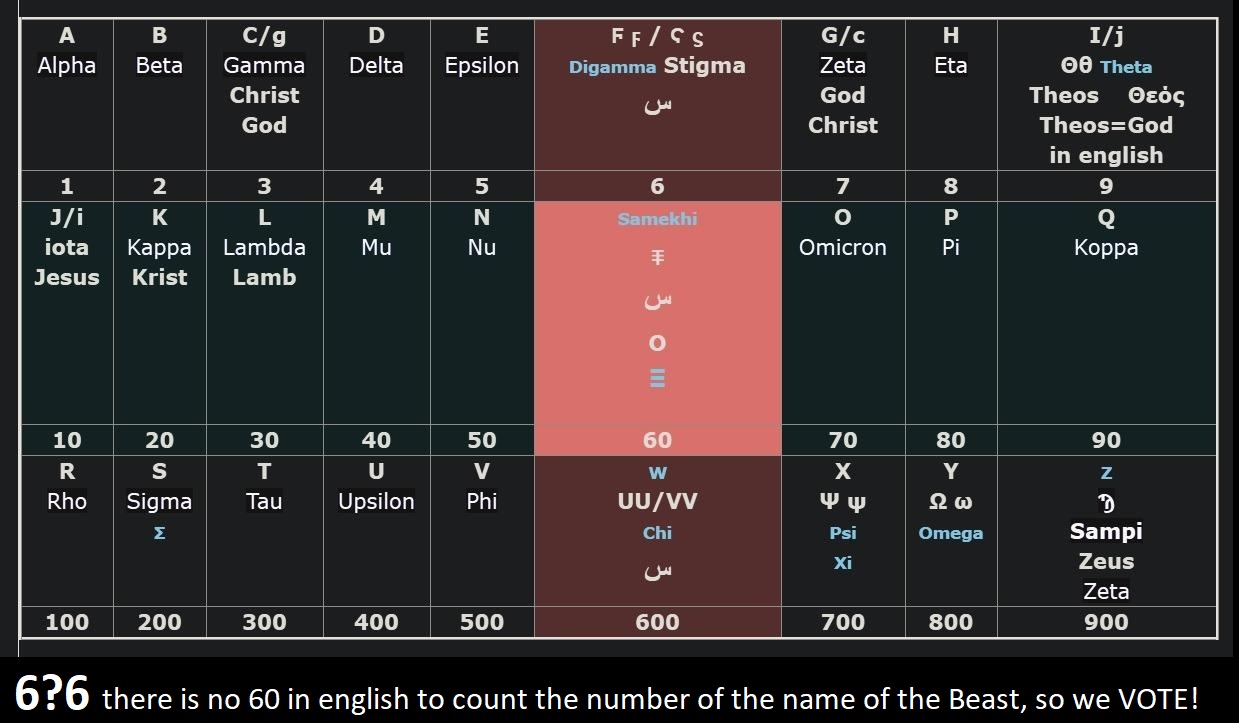
Christian how we Support the Ministry
Industrial Electronic Repair
Industrial Monitor Repair
Power Supply Repair
ebay
Manufacture's Repaired
A B C D E F G H I J K L
M N O P Q R S T U V W X Y Z
Simple Rules for this Site!
Posted by Webmaster on Saturday, August 31 2002
- Web-Ministry is intended for the Glory of God.
- Please try to be respectful of God and to be reverent toward His Word, which is the Holy Bible.
- Some may not be Christian nor agree with Christian theology in general, but please be respectful of those that do and to Christendom in general.
- People from all walks of life and backgrounds of faith are welcome here, including the backslidden and nonbelievers, as well.
- We may not all agree... but we can agree to disagree, at least.
- However, any potential disagreements still need to remain civil in nature, and should stay as such.
- Please, just debate the points of your position, if necessary, and refrain from ad hominem attacks. Slandering and name calling serve no productive purpose.
- Posting rules are based upon decent conduct and generally acceptable chat behavior and, also, on Christian beliefs and morals found in the Holy Bible.
- Please refrain from using offensive language or obscenely suggestive innuendo.
- Usernames that are not becoming of basic common decency and morality are not to be used and may possibly result in membership cancellation.
- Refusing to follow forum rules may result in membership cancellation and possibly some or all applicable posts being deleted and if necessary... entire threads.
- If you feel these things to be unacceptable, please find another forum to post on.Thank you.
- dp,webmaster,Chrysoprasus,wilshine
Jesus Christ Forums
To the Glory of Jesus Christ!
Jesus Christ Forums Software Testing
Radio for Jesus 24/7
Hosted by $SamekhiAmI

Surplus by Samekhi
OR

Cash app $SamekhiAmI
Manufacture's Repaired
A B C D E F G H I J K L
M N O P Q R S T U V W X Y Z
Web-Ministry Created this page in 0.184540 seconds